


Most social media strategies are built on quicksand. They chase the viral post, react to competitors, and serve a disconnected series of promotions. This creates spikes of activity, not growth.
True growth is a predictable, upward trajectory. The foundation for this is already laid: Research found that seven out of ten consumers intentionally follow brands to monitor products and updates.
Customers have raised their hands. They are already in your store. The critical error is treating them as an audience to shout at, rather than a community to build with.
Transforming social platforms into a genuine growth channel requires abandoning the short-term playbook. It demands a systematic, operational discipline where every piece of content is tied to a business outcome beyond likes.
Let’s examine the operational mindset and key practices that make this possible.
Using Social Media to Reinforce Brand Positioning
A clear brand position is your cornerstone. Social media’s daily touchpoints either cement that foundation or erode it.
When used intentionally, every post becomes a brick in a recognizable structure, building consistency and trust that attracts the right customers and repels the wrong ones. This consistency turns vague awareness into specific understanding, making your brand the automatic choice in your category.
To implement this:
- Identify the gap you’re filling. What makes your approach different? What do you believe that others in your space don’t?
- Every post should reinforce that distinction. If you’re the premium option, your content needs to reflect expertise and exclusivity. If you’re the accessible alternative, you’d better sound like it.
- Align your messaging across everything. Your captions, your visuals, and your partner announcements need to ladder up to the same core promise. Inconsistency doesn’t just confuse people. It erodes trust.
- Focus on associations that strengthen your position. The partnerships you highlight, the voices you amplify, and the conversations you join send signals about where you sit in the market. Choose them strategically.
A practical example of this tactic is Uproas, a provider of managed, premium advertising accounts for major platforms like Meta and Google. Their position hinges on being a stable, expert partner in a complex technical space. Their LinkedIn content directly supports this.
There, they share clear analyses of platform policy changes, detail their rigorous vetting processes, and announce partnerships with established software providers. They don’t deal with trendy gossip or casual engagement bait but use each post to reinforce their core message, which is providing a secure, high-performance advertising infrastructure.
That’s the difference between saying you’re premium and actually positioning yourself that way.

Source: linkedin.com
Turning Content Themes Into Ongoing Brand Narratives
When brands repeat clear ideas over time, audiences start connecting the dots. They associate the brand with specific viewpoints, behaviors, and expectations.
This creates memory without forcing attention. A steady narrative also reduces the need to explain context in every post. People already know what the brand stands for.
Social platforms surface familiar voices more often, and audiences engage more when they recognize intent. Clear narratives also guide internal decisions. Teams know what belongs on the feed and what doesn’t. That focus saves time and keeps output aligned with long-term goals.
To implement this:
- Define a small set of content themes that reflect the brand’s role in the market.
- Each theme should support one idea the brand wants to own. This could include short opinions, simple updates, or direct responses to trending conversations.
- Consistency in tone matters as much as topic. Document language rules and posting patterns so the feed feels intentional, not reactive.
- Cadence matters too. Posting at irregular but reliable intervals can still work when the narrative stays intact. The goal isn’t volume but presence.
- Review engagement patterns monthly and adjust themes that drift from the core message.
- Comments and replies deserve the same attention since they extend the narrative in public.
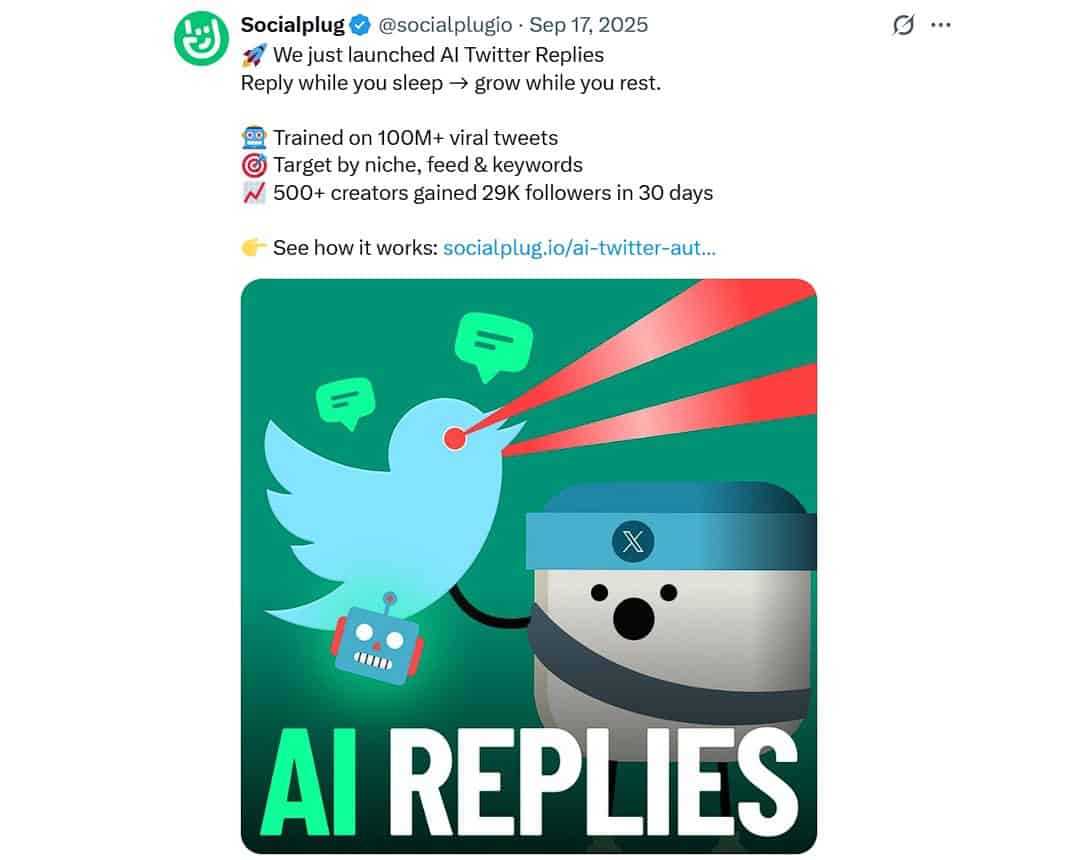
Socialplug shows how this plays out in practice. The brand operates a marketplace that helps users boost visibility through followers, likes, views, and comments across social platforms.
On X, their feed stays highly uniform. Posts stay short, upbeat, and direct. They appear often enough to stay visible, especially in active threads, without overposting. That consistency mirrors what they sell: ongoing engagement and steady activity. The tone stays positive and professional, which reinforces trust.
Over time, this predictable presence builds recognition through repetition, not explanation.
Source: x.com
Turning Long-Form Content Into Ongoing Social Media Assets
Publishing a blog post or guide and moving on wastes most of its value. Long-form content contains dozens of standalone ideas that can fuel months of social posts.
Brands that extract and redistribute these ideas can cut content creation time by 60-80% while tripling their reach. The effort is already done – you’re just maximizing the return.
Most brands treat content like it expires. They publish once, share once, and forget it exists. Smart brands mine their archives and turn single pieces into renewable assets that work for quarters, not days.
To implement this:
- Break long-form content into atomic ideas. A 2,000-word article might contain ten distinct concepts. Each one can become a standalone post, graphic, or video. This way, you’re repackaging insights for people who consume information differently.
- Schedule resurfacing cycles. Your best content should reappear every 60-90 days in new formats. Most of your audience missed it the first time. Even those who saw it forgot about it.
- Use stories and highlights to extend shelf life. Stories create urgency around older ideas. Highlights archive them permanently for new followers who want to dig deeper.
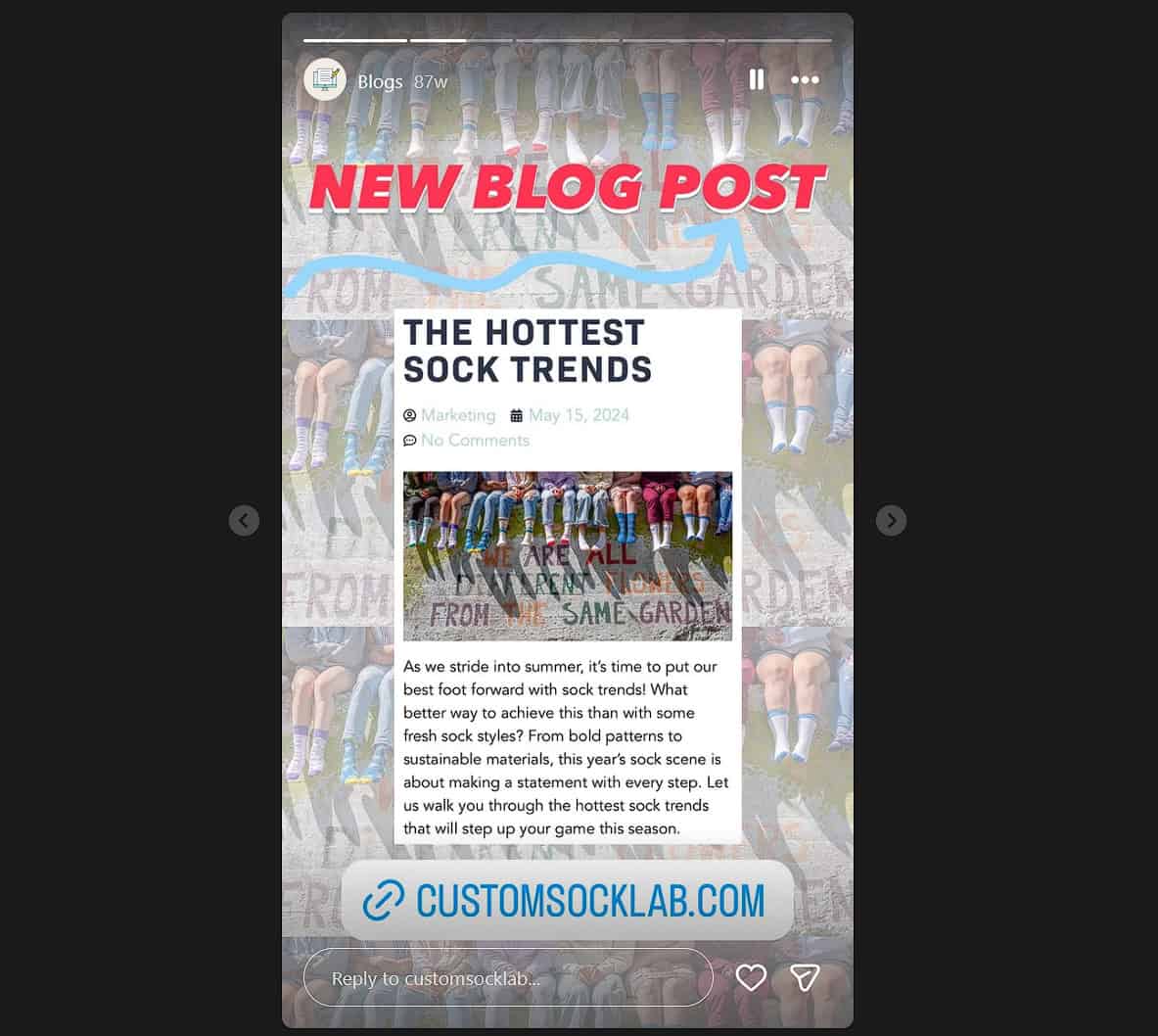
Custom Sock Lab creates personalized socks for businesses and individuals. They’ve turned their blog content into a continuous social presence.
When they publish guides on sock design, bulk ordering, or branding strategies, those topics don’t disappear. They resurface as Instagram posts weeks later, get reframed in stories with fresh angles, and live permanently in organized highlights.
Someone discovering them in March sees content originally published in October, still driving value. Their highlights function like a content library, making old posts discoverable and useful indefinitely.
They’ve built a system where one piece of content generates visibility for months without additional writing. That’s leverage.
Source: instagram.com
Creating Content That Holds Value Beyond the Day It’s Posted
Timely content dies fast. Evergreen content keeps working. The post you publish today should still make sense (and still convert) six months from now.
That’s how you build compounding value instead of running on a content treadmill.
Evergreen content costs less to maintain, generates three times more leads than timely posts, attracts more inbound links, and delivers steady traffic long after publication. You create it once, and it pays dividends indefinitely.
Most brands ignore this because they’re addicted to reacting to trends.
To implement this:
- Focus on foundational topics in your niche. What do people always need to understand? What questions come up repeatedly? Those are your evergreen opportunities.
- Avoid references to seasons, current events, or “this year.” Write like the post should work in the years ahead as well.
- Prioritize clarity over cleverness. Evergreen content succeeds when it’s immediately useful. Simple frameworks, step-by-step processes, and clear explanations age better than hot takes or commentary.
- Design for quick comprehension. Use visuals that explain concepts without words.
- Make posts easy to save and revisit.
Brain Ritual sells science-backed supplements for managing migraines and supporting brain health. One of their Instagram posts walks through simple steps for identifying migraine triggers. You’ll see no time-sensitive hooks on it. Just clean design, intuitive visuals, and actionable information.
The post works because it solves a persistent problem. Someone discovering it today gets the same value as someone who saw it months ago. The focus stays entirely on helping the reader understand something useful. It’s the kind of content people save, share with friends dealing with migraines, and return to when symptoms flare up.
That’s how you turn social media into an asset that appreciates instead of depreciates.

Source: instagram.com
Showing Up Regularly Without Relying on Constant New Ideas
You don’t need endless inspiration to post consistently. What you need is a system. Brands that show up reliably aren’t more creative. They’ve just accepted that repeating core messages in fresh formats beats chasing novelty.
Consistency like this can boost revenue by up to 33% because audiences trust brands they recognize and remember.
Most creators burn out trying to invent something new every time they post. The brands that last have realized their audience needs to hear the same messages multiple times before they stick. Repetition builds recognition. Recognition drives action.
To implement this:
- Build a content matrix. List your five to seven core messages vertically and your content formats horizontally – carousel, single image, video, text post, story. Now you’ve got 30+ content ideas without inventing anything new.
- Rotate messages on a schedule. If you post five times a week, cycle through your core themes so each one appears at least twice a month. Your audience won’t notice the repetition because they’re not consuming everything you publish.
- Vary the angle, not the message. If your theme is “protein timing matters,” you can approach it through workout recovery, muscle growth, meal planning, or supplement timing. Same principle – different entry points.
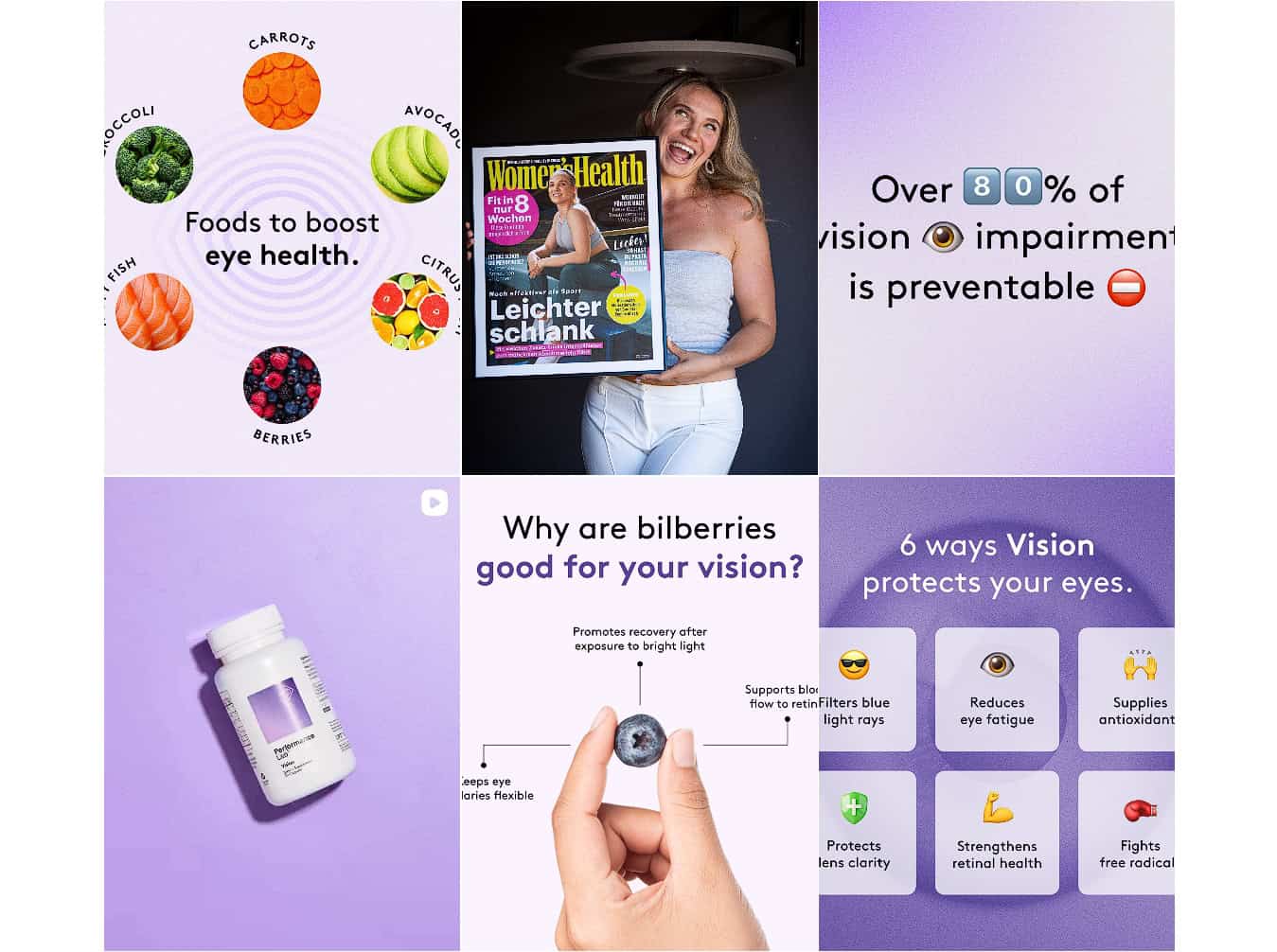
Performance Lab, a brand specializing in advanced nutritional supplements, demonstrates this approach. Their Instagram demonstrates how to stay consistent without getting repetitive.
They cycle through recurring themes (vitamin and mineral education, nutrient-dense foods, and supplement science) but shift the presentation constantly.
One week, they break down magnesium’s role in sleep. Two weeks later, they’re explaining food sources rich in magnesium. A month after that, they discuss magnesium deficiency symptoms. It’s the same core topic with three different angles that each provide value.
This way, their feed stays cohesive without feeling stale. Followers know what to expect, which builds trust and keeps them coming back.
Source: instagram.com
Using Social Media as a Trusted Channel for High-Stakes Communication
When something matters, people need to trust where the information comes from. Brands that earn that trust turn social media into a go-to resource, not just another marketing channel.
This positions you as essential rather than optional. That’s what keeps audiences engaged long-term.
Most brands treat social media like a billboard. They promote, announce, and sell. But brands that build authority use it differently. They share information people actually need, especially when the stakes are high. That shift from promotional to practical changes how audiences perceive you.
To implement this:
- Identify the critical questions your audience faces. What keeps them up at night? What mistakes could cost them money, time, or safety?
- Address those directly with clear, actionable information.
- Ditch engagement bait when the topic demands seriousness. Clickbait and vague teasers erode trust.
- When you’re covering something that matters, lead with substance. Give people what they came for without making them work for it.
- Commit to accuracy over speed. If you’re positioning yourself as a reliable source, getting it right matters more than being first. Verify information before posting. Cite sources when relevant.
- Format for clarity. Dense paragraphs and jargon kill comprehension. Break information into scannable sections and use straightforward language.
DialMyCalls shows how this strategy plays out. The company provides mass text messaging and voice notification tools for organizations that need to reach people quickly.
Their Facebook content reflects the weight of what their clients handle. One post breaks down the six most common emergency notification challenges schools face and how to solve them.
This content serves administrators dealing with real crises. It doesn’t tease or hype but delivers practical guidance on a topic where mistakes have consequences. Sharing this type of information allows the company to position its platform as a tool on which serious organizations rely.
That’s worth more than a thousand engagement-optimized posts.

Source: facebook.com
Final Thoughts on How Brands Turn Social Media Into a Long-Term Growth Channel
Building social media into a growth channel is an operational shift. It requires moving from chasing trends to reinforcing your position, from isolated posts to sustained narratives, and from disposable content to durable assets.
The goal is systematic value – turning every update into a brick in a larger, more stable structure. This approach transforms platforms from megaphones into engines. It’s how you build a community that actively fuels your business for the long term.
So, start by auditing one channel. Identify where you can swap a temporary tactic for a foundational practice. Then build from there.