

You’ve built an audience. Your posts are getting engagement. But your revenue dashboard shows minimal growth. According to Sprout Social, while 89% of marketers consider social media critical to their strategy, only 23% report it’s very effective at driving revenue.
The problem isn’t your content; it’s that you lack a systematic approach to converting engagement into sales. This guide provides the framework to turn engagement into revenue.
You’ll learn how to structure content that generates buying intent, implement lead-capture systems, create platform-specific conversion processes, and establish metrics that directly link social activity to sales. Let’s build that system.
Building a sales-focused content strategy
Most businesses approach social media content with one of two extremes: either they post educational content and hope sales will happen organically, or they push promotional offers until their audience loses interest.
The solution is strategic balance. Your content needs to build trust while creating buying intent. Here is how you can do it:
A. Use the 80/20 content framework
Allocate 80% of your content to value-driven posts that educate or solve problems. The remaining 20% promotes your offer directly. If you post daily, that’s 24 value posts and 6 promotional posts per month.
The key is making your 80% strategically valuable. Every piece should address the problems your product solves or demonstrate your domain expertise.
B. Create content types that convert
Educational content that positions you as the solution focuses on frameworks and processes. Instead of “5 ways to improve your Instagram,” post “Why most Instagram strategies fail (and our 3-step framework that generates leads).” You’re educating while differentiating.
Interactive content that qualifies leads includes polls, quizzes, and questions that show buying intent. A fitness coach posting “Comment ‘ready’ if you want to lose 20 pounds before summer” identifies prospects actively looking for solutions.
C. Utilize platform-specific tactics
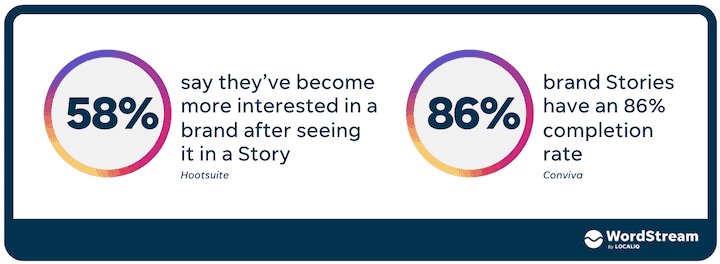
Instagram: Use Stories for daily touchpoints and structure Highlights as a sales funnel—testimonials, process, FAQs, offer. According to Instagram, 58% of users become more interested in a brand after seeing it in Stories. Your link-in-bio needs clear navigation with multiple calls-to-action, not just a homepage link.
(Source)
LinkedIn: Post thought leadership that demonstrates expertise, then move conversations to DMs. LinkedIn reports that 80% of B2B leads come from the platform, but conversion happens in direct messages. Comment on prospect posts and use personalized connection requests to start sales conversations.
TikTok: Lead with outcomes in the first 3 seconds. Use the formula: hook -> value -> call-to-action. “Stop spending money on ads that don’t work.” “Here’s why your targeting is wrong.” “Follow for the 3-part framework I’m posting this week.” Your profile bio needs a clear offer and link for high-intent visitors.
The lead capture system
Your social media content creates awareness and interest. But without a systematic way to capture leads, you’re losing prospects the moment they scroll past your post. A lead capture system does three things: it collects contact information from interested prospects, qualifies them based on their behavior and needs, and nurtures them toward a purchase decision.
Most businesses skip straight to asking for the sale. The system works because it meets prospects where they are in their buying journey.
Lead magnets that actually convert
Start with offers that solve immediate, specific problems. Generic resources don’t work. “Free marketing guide” is too broad. “The 5-email sequence that converts 23% of cold leads into booked calls” is specific and promises an outcome.
High-performing lead magnet formats:
- Quiz funnels and assessments – Interactive and provide personalized results. “Take this 2-minute quiz to discover why your Instagram isn’t converting, captures leads while segmenting your audience based on their specific challenges.
- Downloadable resources – Checklists, templates, and guides that promise to save time or simplify complex processes. These work when they deliver quick wins that demonstrate your expertise.
- Free training or mini-courses – Position you as an authority while keeping prospects engaged over multiple days, building familiarity and trust.
- Exclusive communities – Private Slack groups, Discord servers, or members-only content hubs in exchange for email signup. According to CMX, community members are 5x more likely to purchase than non-members.
Why email still matters
Email converts 40x better than social media, according to McKinsey. Social platforms control your reach; algorithm changes can cut your visibility overnight. Email puts you in direct contact with prospects.
Create opt-in offers that align with your social content. If you post about content marketing, offer “The Content Calendar Template that saves 10 hours per week.” Make the connection obvious so people understand why they should join your list.
Automation that works
Someone who downloads your lead magnet should receive a welcome email within minutes. According to Invesp, companies that respond to leads within 5 minutes are 9x more likely to convert them. Set up automated sequences that:
- Welcome new subscribers and deliver their lead magnet
- Educate them about your methodology over 3-5 emails
- Share social proof and case studies
- Present your offer with clear next steps
Segment your list based on behavior. Someone who downloads a beginner’s guide needs different messaging than someone who downloads an advanced framework. Behavioral segmentation lets you send relevant offers to qualified prospects instead of generic promotions to everyone.
The DM strategy
Direct messages create high-intent conversations. When someone comments on your post, engages with your Stories, or downloads your lead magnet, a DM opens a direct channel. But timing and approach matter.
Don’t immediately pitch. Start with value, for example, “Saw you commented on my post about lead generation, want me to send you the case study I mentioned?” This begins a conversation rather than triggering a sales objection.
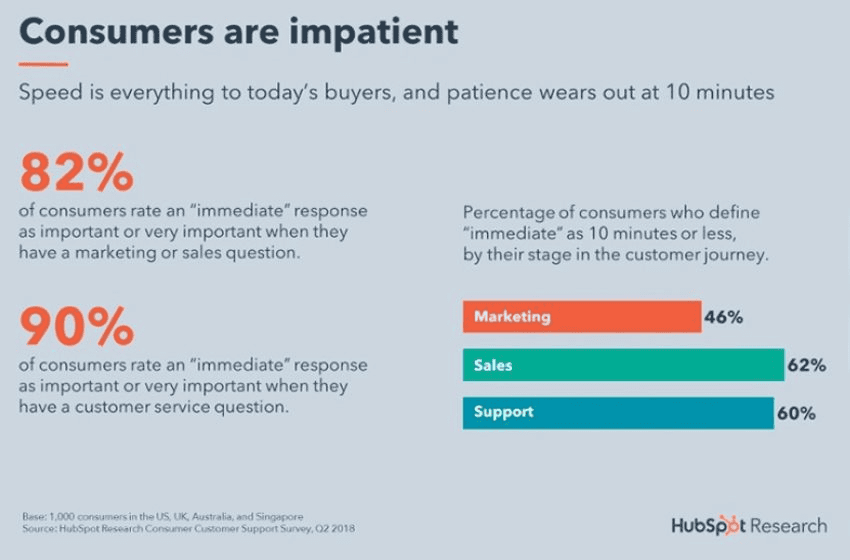
For platforms that allow automation, keep initial outreach conversational: “Hey [Name], thanks for downloading the template! Quick question, what’s your biggest challenge with [topic] right now?” According to Hubspot, 82% of consumers want immediate responses, but they also want those responses to feel human.
(Source)
Qualifying and converting in DMs
Ask questions that reveal budget, timeline, and decision-making authority:
- “Are you currently using any tools for this?”
- “What’s prompting you to look for a solution now?”
- “What have you tried so far?”
These questions help you understand if they’re ready to buy. For lower-ticket offers, you can close the sale directly in DMs. For high-ticket services, book a call: “Based on what you’ve shared, I think our [service] would be a great fit. Want to jump on a 15-minute call this week to discuss specifics?”
The lead capture system works because it creates multiple entry points for prospects at different stages of awareness. Some will download a lead magnet and buy weeks later via email. Others will DM you immediately and book a call.
Creating your sales funnel
A sales funnel is the structured path that takes someone from discovering you on social media to becoming a paying customer. According to Salesforce, 68% of companies haven’t identified their sales funnel, which explains why most social media efforts don’t convert.
The four stages of your funnel
1. Awareness: Prospects discover you exist. Your content should be educational, entertaining, and shareable. For example: “Why your team meetings waste 3 hours per week.”
2. Consideration: Prospects evaluate solutions. Your content demonstrates your methodology and shares case studies. For example: “The 4-step framework that reduced our client’s meetings by 60%.”
3. Decision: Prospects choose between options. Your content addresses objections and showcases social proof. For example: “How [brand] implemented our system in 2 weeks” plus a limited-time offer.
4. Retention: Keep customers engaged and increase lifetime value. According to Bain & Company, increasing retention by 5% increases profits by 25-95%. Example: Exclusive tips, win celebrations, and new feature announcements.
Automated nurture sequences
Research from Marketing Donut shows that 80% of sales require 5 follow-up attempts, yet 44% of salespeople give up after one. Automate follow-ups based on specific actions:
- Downloads lead magnet → 5-email welcome series ending with an offer
- Clicks pricing page, but doesn’t buy → 3-email objection-handling sequence
- Engages with 3+ posts weekly → DM offering free consultation
- Makes purchase → onboarding sequence driving product adoption
Measuring what matters
Track conversion rates at each stage to identify challenges:
- Awareness to consideration: What % of new followers engage within 7 days?
- Consideration to decision: What % of engaged followers click your links?
- Decision to purchase: What % of link-clickers become customers?
Identify the weakest point and test improvements. According to Invesp, companies that A/B test every funnel element see 30-40% higher conversion rates. Small improvements compound, increasing each stage by 10% increases overall conversions by 33%.
You can strengthen this journey by showcasing real-time user-generated content and testimonials through a social media feed on the website, helping move prospects from awareness to decision with visible social proof.
Systems for consistency
Consistency separates businesses that occasionally generate leads from those that do it predictably. According to CoSchedule, brands that post consistently are 3.5x more likely to see strong results than those that post occasionally. But consistency isn’t about pushing harder—it’s about building systems that work without requiring constant manual effort.
Content planning and batching
Decision tiredness kills consistency. When you sit down each day wondering, “What should I post today?” you’ve already lost. The solution is batching, creating multiple pieces of content in focused sessions.
Block time weekly or monthly to produce content in bulk. In a 3-hour session, you can write 12 posts, record 8 videos, or design 15 graphics. According to the American Psychological Association, batching similar tasks improves efficiency by up to 40% compared to task-switching.
Map content themes across the month:
- Week 1: Awareness content (problem identification)
- Week 2: Consideration content (solution education)
- Week 3: Decision content (social proof and offers)
- Week 4: Mix of all stages plus engagement content
Use scheduling tools like bulk.ly to load content in advance. According to Sprout Social, businesses using scheduling tools post 5x more consistently than those posting manually.
CRM and lead management
Track every prospect interaction in one system. When someone comments, DMs, downloads your lead magnet, or clicks your link, that data — whether captured online or through tools like indoor tracking software — should flow into your CRM. You can use platforms including HubSpot (free), Pipedrive, or ActiveCampaign.
Tag leads based on behavior: “beginner,” “high intent,” “engaged.” Set up automated workflows:
- Lead magnet download -> enters email sequence
- Email link click -> receives targeted offer
- No engagement for 30 days -> gets re-engagement campaign
According to Nucleus Research, CRM systems increase sales productivity by 15% and reduce customer acquisition costs by 23%.
Attribution and tracking
Use UTM parameters on all social links. This shows which posts drive conversions. Set up conversion tracking pixels from Facebook, LinkedIn, and TikTok. According to WordStream, businesses using conversion tracking see 2x better ROI.
Track these metrics:
- Cost per lead: Spend / number of leads
- Lead-to-customer rate: Percentage of leads who buy
- Customer acquisition cost: Total cost per customer
- Customer lifetime value: Revenue per customer
Monthly reviews
Review monthly:
- Which content got the most engagement and clicks?
- Which lead magnets had the highest conversion?
- Which email sequences performed best?
- Which traffic sources generated the most customers?
Double down on what works, remove what doesn’t.
Common mistakes and how to avoid them
Most businesses fail at converting social media engagement into sales, not because their content is bad, but because they’re making predictable, avoidable mistakes.
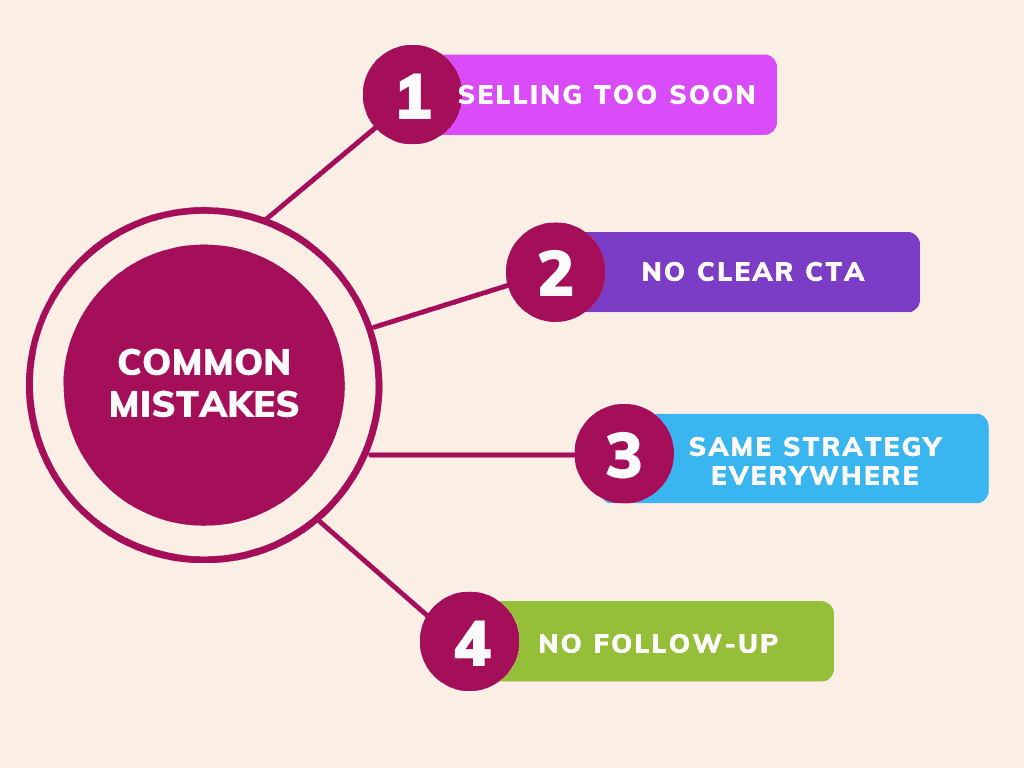
1. Being too salesy too soon:
The fastest way to lose an audience is to push offers before building trust. According to Edelman’s Trust Barometer, 81% of consumers need to trust a brand before purchasing. Avoid direct messaging new followers with sales pitches within 24 hours or posting “buy now” every third post. Instead, follow the 80/20 framework—provide value first, build credibility, then make offers. Even promotional content should lead with benefits and transformation, not features and price.
2. Weak or missing calls-to-action:
According to WordStream, adding a clear CTA increases conversion rates by 121%. Stop posting valuable content with no next step or using vague CTAs like “check out my bio” without explaining why. Make every CTA specific and benefit-driven: instead of “Link in bio,” say “Grab the free template that automates this entire process—link in bio.” Make the action easy and the benefit obvious.
3. Treating all platforms the same:
What works on LinkedIn won’t work on TikTok—each platform has different user behaviors and conversion mechanisms. Don’t create one piece of content and post it identically everywhere. Adapt to each platform’s native behavior: use Stories and Highlights on Instagram, focus on thought leadership and professional conversations on LinkedIn, and hook viewers in 3 seconds on TikTok to drive profile visits.
4. Not following Up:
The National Sales Executive Association reports that 80% of sales require five follow-ups, yet 44% of salespeople give up after one. When someone engages with your content or downloads your lead magnet, don’t follow up once and move on when they don’t immediately convert. Build systematic follow-up into your process—someone who downloads a lead magnet should receive 5-7 touchpoints over 30 days via email, retargeting ads, or personalized DMs, with each touchpoint providing value.
Final Thoughts on Turning Social Media Engagement Into Consistent Leads and Sales
Converting social media engagement into revenue isn’t about posting more—it’s about building systems that turn followers into customers. The framework: create strategic content using the 80/20 rule, capture leads with targeted offers, nurture through automated sequences, and track what converts. The businesses winning on social media have the best systems, not the most followers.
Start with one platform, implement lead capture, and optimize based on data. Small improvements compound—a 10% increase at each funnel stage multiplies overall results by 33%. Your audience is already there. Now build the system that turns engagement into revenue.